Best IKEA Organizers for Tiny Closets Under $20
A cramped closet gets expensive fast. You waste time digging for shirts, lose track of shoes, and end up buying storage bins that do not fit your space. That is why IKEA organizers for tiny closets under $20 are worth a close look right now. They solve a real problem with small-footprint pieces, and they do it without pushing you into a full closet remodel.
I have covered home storage long enough to know the pattern. Cheap organizers often bend, sag, or eat up the little room you have left. IKEA has misses too, but a few low-cost staples keep showing up in small-space setups for a reason. They are simple, easy to place, and useful in the awkward gaps most closets have.
What is worth buying first
- Hanging shelf organizers add vertical storage without tools.
- Slim bins and boxes help separate accessories, socks, and folded items.
- Door and rod add-ons turn dead space into working storage.
- Open organizers make it easier to see what you own and use it.
Why IKEA organizers for tiny closets under $20 work
Small closets usually fail in three places. The top shelf becomes a junk pile, the floor turns into a shoe dump, and the hanging rod does all the work. Good organizers fix those pressure points without making the closet feel tighter.
That is where budget IKEA pieces can help. Think of them like a smart kitchen mise en place. Everything gets a place before the mess starts. And once each category has a home, your closet works faster.
The best tiny-closet organizer is not the one with the most compartments. It is the one that uses vertical space, stays visible, and fits your habits.
Best IKEA organizers for tiny closets under $20 to consider
SKUBB hanging organizer
This is one of IKEA’s most practical small-space tools. It hangs from a closet rod and creates stacked shelves for folded sweaters, jeans, tees, or bags. No drilling. No shelf installation. Just instant vertical storage.
For a tiny closet, that matters. You are taking the same airspace and putting it to work. If your shelf is too high to reach easily, a hanging organizer often beats trying to stack folded clothes up top.
SKUBB boxes and drawer organizers
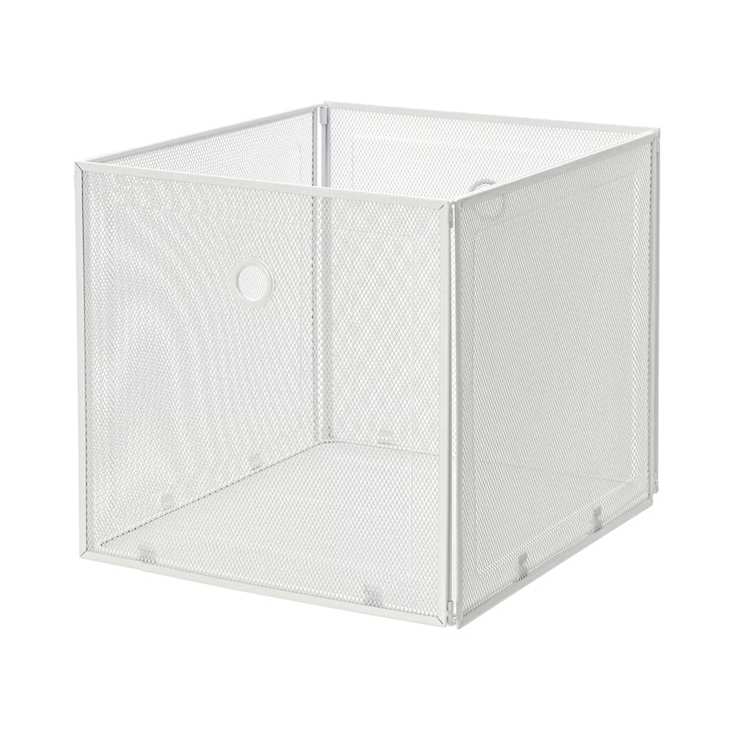
Loose accessories create visual noise fast. SKUBB boxes help divide shelves and drawers into clean zones for underwear, belts, socks, scarves, or workout gear. They are light, foldable, and easy to shift around as your needs change.
Honestly, this is the kind of cheap storage that earns its keep. You stop making messy little piles because each item has a slot.
STUK series organizers
The STUK line is useful if you need covered storage or soft-sided compartment systems. These can hold seasonal items, extra linens, or accessories that do not need daily access. The structure is simple, but it can tame shelf clutter better than random baskets from a discount store.
And that matters in a closet where every inch is non-negotiable.
MURVEL shoe organizer
Shoes are usually the first thing to take over a tiny closet floor. MURVEL shoe organizers stack one shoe above the other, which cuts the footprint and keeps pairs together. It is a basic fix, but basic is fine when it works.
Do not expect luxury here. Expect order. That is enough.
VARIERA shelf inserts and bins
VARIERA products are often linked to kitchens, but some of them work surprisingly well in closets. Shelf inserts can create a second level for folded tops or handbags. Small bins can hold accessories on deep shelves where items usually vanish into the back.
This is a good example of using a product outside its original lane. If it fits your shelf depth, it fits your problem.
How to choose IKEA organizers for tiny closets under $20
Do not buy by price alone. Buy based on the choke point in your closet. Ask yourself one blunt question. What fails first every week?
- If folded clothes collapse, start with a hanging organizer or shelf insert.
- If shoes spread everywhere, start with compact shoe organizers.
- If accessories get lost, add divided boxes or small bins.
- If the top shelf is chaos, use matching storage boxes with labels.
Look, tiny closets punish bad sizing. Measure shelf width, depth, and rod clearance before you buy anything. Even low-cost organizers become clutter if they fight the space instead of fitting it.
Smart setup tips for IKEA organizers for tiny closets under $20
One mistake shows up again and again. People buy organizers but keep the same clutter habits. Storage does not fix overstuffing by itself.
Try this setup instead:
- Keep daily-use items between chest and eye level.
- Move off-season clothing to upper shelves or covered boxes.
- Use one organizer per category, not one organizer for everything.
- Leave a little empty room so items go back easily.
That last point matters more than people think.
A packed closet is like a badly designed hallway. If there is no room to move, the whole system breaks down.
Are these budget closet organizers actually a good value?
Usually, yes. But only if they solve a precise problem. A $10 hanging shelf that doubles usable storage is a better buy than a $20 bin set that just hides mess on one shelf.
Apartment Therapy highlighted several IKEA options for small closets in this price range, and that lines up with what many small-space renters already know. Soft organizers, shoe stackers, and modular bins tend to outperform bulky plastic drawer towers in tight closets because they waste less width and adapt more easily.
If you want a durable, built-in closet system, these are not that. If you want a fast, low-risk upgrade that makes mornings less annoying, they are a solid bet (especially for renters).
What I would buy first
If I had a narrow apartment closet and twenty bucks, I would start with one hanging shelf organizer and one set of small accessory boxes. That combo fixes the two biggest issues in most tiny closets, folded-clothing sprawl and accessory drift.
Then I would add shoe organization next. Why? Because closet floors become dumping grounds the minute the shoe pile starts.
The next move
The smart play is to treat your closet like a tiny room with rent due on every inch. Start with one weak spot, buy one or two IKEA organizers that match it, and test the setup for a week. If a product saves space and friction, keep building. If it just hides the mess, skip the hype and move on.