How Homeowners Are Funding Renovations in 2025
You want to improve your home, but paying for it is the hard part. Prices for labor, materials, and borrowing have all shifted, so a project that looked manageable a year ago can feel far more expensive now. That is why home renovation financing matters so much in 2025. The wrong choice can leave you paying interest for years. The right one can keep your budget intact and your project moving.
Recent homeowner survey data covered by Family Handyman shows a clear pattern. Many people are still leaning on savings for remodeling, while others are mixing in credit cards, home equity products, and personal loans. That split tells you something useful. Homeowners are trying to balance speed, cost, and risk, and there is no one-size-fits-all answer. So what should you actually do if you are planning a kitchen upgrade, bathroom refresh, or larger remodel?
What the numbers show
- Savings remain the top choice for many homeowners funding renovations.
- Credit-based options still play a major role, especially for urgent or mid-sized projects.
- Interest costs matter more now because borrowing is not as cheap as it was a few years ago.
- The best home renovation financing option depends on project size, timing, and how long you plan to stay in the home.
Why home renovation financing choices have changed
Family Handyman points to a familiar reality. Homeowners are being more careful. That makes sense. Higher rates have changed the math, and many people do not want to disturb a low mortgage rate with a refinance just to fund a remodel.
Look, this is the big shift. A few years ago, cheap borrowing made big renovation plans easier to justify. Now every funding option needs a closer look. A remodel financed at a high rate can turn a solid upgrade into a budget leak.
Many homeowners still prefer paying with cash or savings, which helps them avoid interest and keep more control over total project cost.
That approach is boring, yes. It is also often the smartest.
Best home renovation financing options for different projects
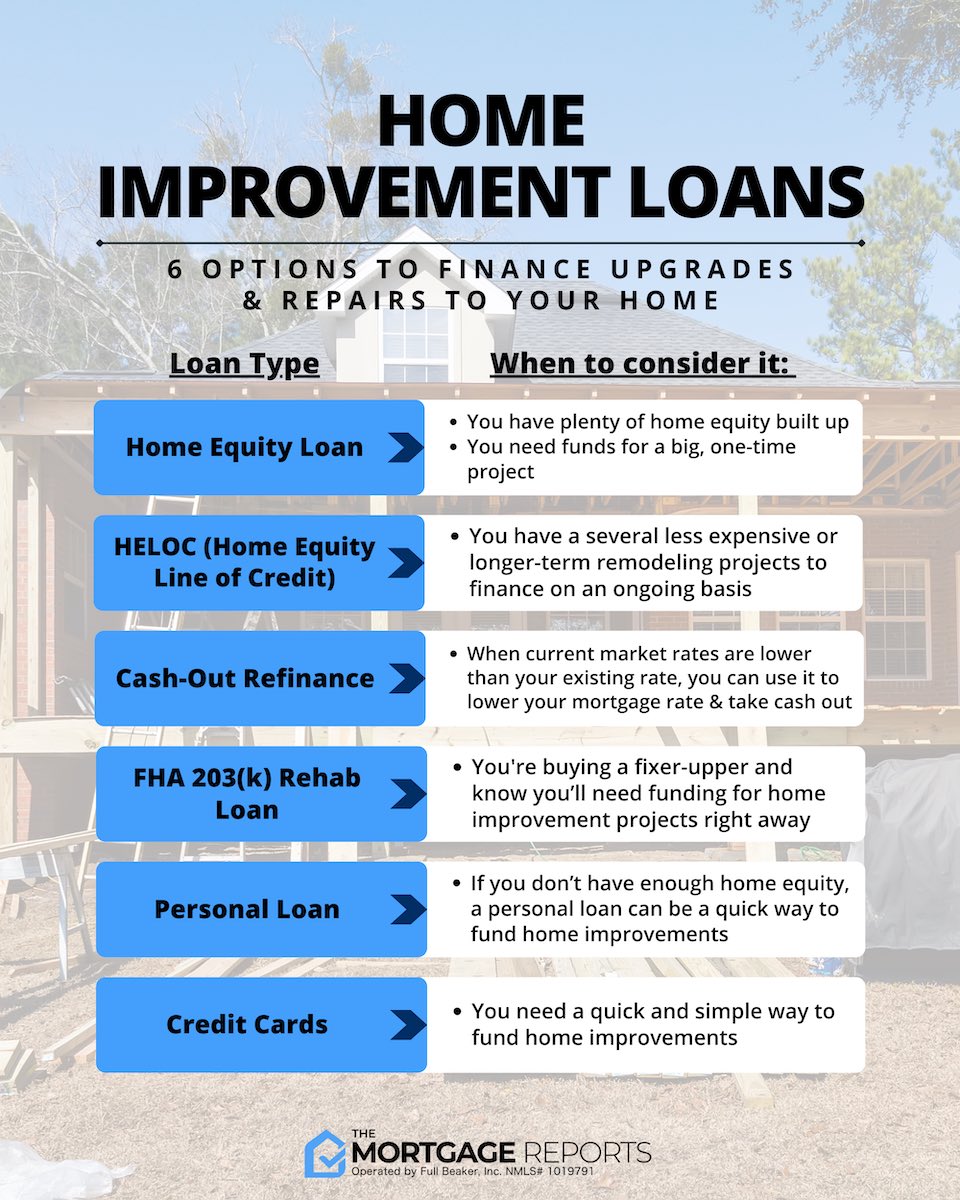
1. Savings and cash for smaller or planned work
If you have the cash, this is usually the cleanest route. You avoid interest, monthly debt, and lender fees. For cosmetic jobs like paint, flooring, fixtures, or a minor bathroom update, paying from savings keeps things simple.
There is a catch, though. Draining your emergency fund to remodel a guest bath is a bad trade. Keep a reserve for job loss, medical bills, or a roof problem that shows up without warning.
2. Credit cards for short-term gaps
Credit cards can work for small purchases or brief cash flow gaps, especially if you have a 0 percent promotional offer and a real payoff plan. But they are dangerous for large projects. Standard APRs can be brutal, and interest stacks up fast if the balance lingers.
Think of a credit card like using a chef’s knife. Precise and useful in the right setting. Messy if you use it for everything.
3. Home equity loans or HELOCs for larger renovations
For homeowners with enough equity, these products are still popular for major projects. A home equity loan gives you a lump sum with a fixed rate. A HELOC, or home equity line of credit, gives you flexible access to funds as needed.
That flexibility can help on phased remodels (especially if contractor draws happen in stages). But your house is tied to the loan. Miss payments long enough, and the risk is real. This is not casual money.
4. Personal loans when speed matters
Personal loans are often easier and faster to get than home equity financing. They can make sense if you need to move quickly and do not want to use your home as collateral. That said, rates may be higher, especially if your credit is only average.
Honestly, personal loans work best when the project cost is moderate and the payoff timeline is short. For a huge remodel, they can get expensive in a hurry.
How to choose the right home renovation financing plan
Start with the project itself. Is it optional, urgent, or value-protecting? Replacing a failed HVAC system is different from upgrading countertops. One preserves livability. The other is largely preference.
Ask yourself a blunt question. Will this renovation still feel worth it after you add interest costs?
- Price the full job first. Get contractor estimates, permit costs, and a 10 to 15 percent buffer.
- Match the funding tool to the project life. Do not finance a short-life cosmetic trend over many years.
- Compare APR, fees, and repayment terms. The monthly payment alone can hide the true cost.
- Protect your cash reserve. Home projects often uncover surprises behind walls, under floors, or in old wiring.
- Check your exit plan. If you might move soon, long repayment terms deserve extra scrutiny.
That last point gets missed all the time.
What many homeowners get wrong about home renovation financing
The most common mistake is focusing only on approval. People ask, “Can I get the money?” when they should be asking, “What will this money cost me over time?” Those are very different questions.
Another mistake is over-improving for the neighborhood. A top-tier luxury kitchen in a modest market does not always return the spend. Remodeling should fit your home, your block, and your timeline. It is a bit like adding a marble lobby to a two-story walk-up. Nice idea. Wrong building.
And then there is project creep. You start with a simple refresh, then add cabinets, then lighting, then flooring, then appliances. Suddenly your “small” remodel needs a financing product that carries real long-term risk.
When paying cash beats borrowing
Paying cash wins when the project is modest, your savings are healthy, and the work does not need to happen overnight. It also helps if the upgrade is unlikely to produce a strong resale bump. Why pay interest on a project that mostly serves personal taste?
But cash is not always king. If using savings leaves you exposed, borrowing part of the cost may be the wiser move. Balance matters more than purity.
What to do before you sign anything
Get specific. Review the contractor scope, payment schedule, warranty terms, and your total financing cost under best- and worst-case timing. Delays happen. Change orders happen. Rates and promo periods matter.
- Ask for a written project timeline
- Confirm whether materials are included
- Check if permits are your responsibility or the contractor’s
- Read loan fees, draw rules, and prepayment terms
- Keep a contingency fund untouched if possible
And yes, shop lenders. Even a modest rate difference can save a useful chunk of money over the life of the loan.
The smarter move from here
Family Handyman’s reporting shows that homeowners are still mixing caution with ambition. They want better kitchens, safer systems, and more useful spaces. But they are being pickier about how they pay, and that is the right instinct. Home renovation financing should support the project, not overwhelm it.
If you are planning work this year, run the numbers before you fall in love with the design. A good remodel can improve daily life and protect your home’s value. A sloppy funding plan can cancel out both. So before you swing the first hammer, ask the harder question. Is your financing plan as solid as the renovation itself?