Martha’s Vineyard Rustic Home Design Ideas
If you love homes that feel relaxed, textured, and tied to their setting, Martha’s Vineyard rustic home design is worth a close look. The challenge for most homeowners is balance. Go too polished and the house feels cold. Go too rough and it starts to read like a theme set. That tension matters right now because many people want interiors with warmth, age, and a sense of place, especially after years of trend-heavy rooms that photograph well but wear poorly.
The best Vineyard-inspired homes get the mix right. They use natural wood, quiet color, practical furniture, and materials that improve with time. Think of it like good coastal cooking. A few solid ingredients, handled with restraint, will beat a plate piled high with garnish every time.
What to steal from this look
- Use patina on purpose. Weathered wood, linen, and aged metal make rooms feel settled.
- Keep the palette quiet. Sand, driftwood, cream, slate, and faded blue do most of the work.
- Choose comfort first. Deep seating and durable fabrics matter more than visual drama.
- Let the setting lead. Coastal homes feel stronger when interiors echo the land and light outside.
Why Martha’s Vineyard rustic home design works so well
This style has discipline. That is the part many trend pieces miss. A Vineyard home does not need endless nautical props or bright beach-house stripes to feel coastal. It gets there through texture, proportion, and restraint.
Architectural Digest’s feature on a Martha’s Vineyard home points to a version of rustic charm that feels edited, not staged. You see honest materials, soft light, and rooms that look used in the best sense of the word. That approach lasts because it is rooted in how people actually live.
Rustic charm works when the materials carry the mood, not when accessories try to shout the theme.
And that is the real lesson. If your floors, walls, furniture, and textiles already tell the story, you need less stuff.
How to build Martha’s Vineyard rustic home design room by room
Start with materials that age well
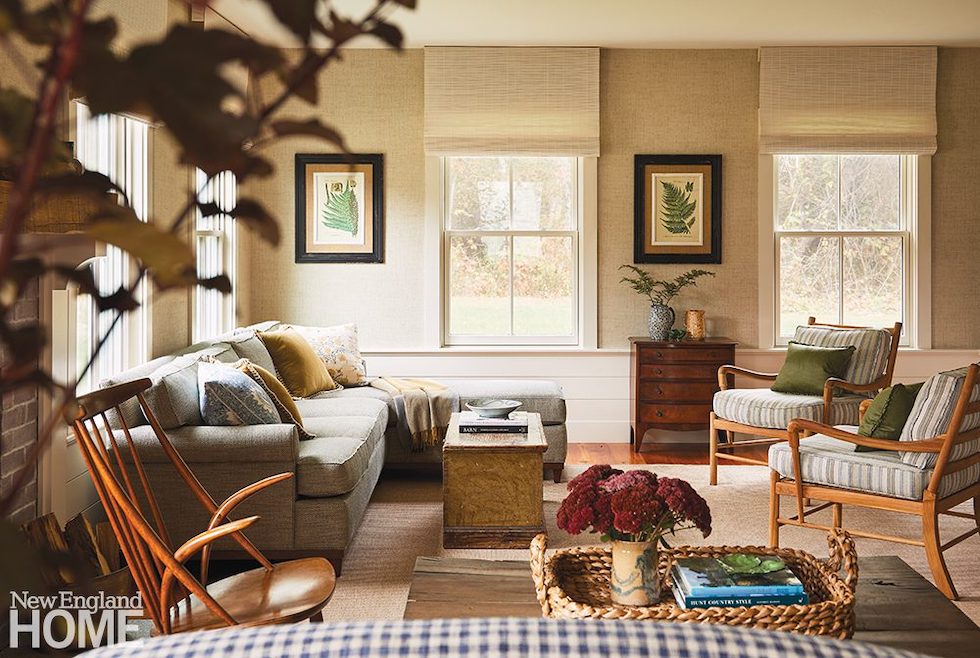
The backbone of Martha’s Vineyard rustic home design is material choice. Wide-plank wood floors, beadboard, limewashed finishes, natural stone, and woven textures do the heavy lifting. They add depth before you bring in a single decorative object.
Look for surfaces that can take wear without looking worse for it. Reclaimed oak, antique pine, unlacquered brass, and brushed nickel all fit. So do linen slipcovers and wool rugs with a little irregularity in the weave.
Perfect is the enemy here.
Keep the color story grounded
You do not need a bold coastal palette to make this style land. In fact, quieter shades usually feel more convincing. Try off-white walls, putty upholstery, gray-brown woods, and muted blue or green accents that echo sea grass and sky.
What colors belong in a rustic coastal house? Usually the ones you would spot on a foggy shoreline, not in a souvenir shop. That means soft, dusty, and low-contrast tones.
Mix refinement with rough edges
Look, this is where many homes either get flat or get fussy. A room made entirely of rough wood can feel heavy. A room filled with polished pieces can lose the island ease that makes Vineyard interiors appealing.
Try pairing a chunky farmhouse table with cleaner-lined dining chairs. Set a tailored sofa against a wall with visible wood grain. Use antique pieces sparingly, then counter them with simpler lighting or quieter upholstery. It is a bit like building a stone wall. The irregular pieces work because there is structure holding them together.
Martha’s Vineyard rustic home design details that matter most
- Slipcovered seating: It softens the room and makes daily use less stressful.
- Layered lighting: Use sconces, table lamps, and shaded pendants instead of harsh overhead light.
- Natural fiber rugs: Jute and sisal bring grit and warmth, especially in entryways and living rooms.
- Vintage wood pieces: A scrubbed pine bench or worn chest adds age fast.
- Understated hardware: Bin pulls, iron latches, and simple knobs keep cabinetry from feeling over-designed.
But avoid turning every surface into a display. One old stool by the fireplace says more than six decorative oars on the wall.
How to avoid the fake coastal trap
The fastest way to weaken this style is to over-explain it. If guests walk in and immediately spot shells, anchors, ropes, and signs about the sea, you have probably pushed too hard. Real coastal character feels absorbed into the house, not pasted on top.
Instead, focus on function and wear. A bench by the door for sandy shoes. Storage baskets that actually hold blankets. Dining chairs that can survive a crowded summer weekend. The strongest homes have a working rhythm to them (and that usually reads as beauty).
Honestly, this is where rustic design earns its keep. It is forgiving. Scratches, faded textiles, and sun-worn finishes often add to the room instead of subtracting from it.
What you can copy on a normal budget
You do not need a Martha’s Vineyard address to borrow the mood. You need editing. Buy fewer pieces, choose better textures, and let negative space breathe.
- Paint walls a soft mineral white instead of stark bright white.
- Swap shiny hardware for aged brass or matte black.
- Add linen curtains that hang simply, without heavy trim.
- Choose one vintage wood piece per room.
- Use baskets, crocks, or plain ceramic lamps instead of novelty decor.
A smart shortcut is to start with the living room. Upgrade the sofa fabric, add a textured rug, and replace busy accent decor with two or three pieces that have actual age or visual weight. That alone can shift the tone.
What this style says about living well
The appeal of Vineyard interiors is not just visual. It is behavioral. These homes suggest slower mornings, shoes kicked off at the door, windows open when weather allows, and rooms meant for gathering rather than showing off.
That may sound obvious, but plenty of stylish homes fail that test. They look sharp in photos and stiff in person. A rustic island house, at its best, does the opposite. It feels better the longer you stay.
If you are reworking your own place, take the hint. Choose the chair people fight over. Pick the table that can handle scratches. Let the wood darken, the linen wrinkle, and the room settle in. Your house should feel like it belongs to real life, not a weekend photo shoot.
Where I’d start first
If you want the spirit of Martha’s Vineyard rustic home design without a full renovation, begin with three moves. Fix the lighting. Simplify the palette. Bring in one material with age, whether that is reclaimed wood, vintage brass, or a worn wool rug.
Then stand back and ask a blunt question. Does the room feel calm, useful, and a little weathered? If not, remove something before you add anything else. That instinct, more than any shopping list, is what gives this style its staying power.