Organic Modern Kitchen Renovation Ideas That Actually Work
If your kitchen feels cold, cramped, or dated, you are probably seeing the same problem many homeowners face. Clean modern lines can look sharp, but they often drift into sterile territory. An organic modern kitchen renovation fixes that by mixing minimal shapes with warmer materials, softer texture, and better function. That matters now because kitchen remodel costs stay high, so every design choice needs to pull its weight. You want a room that looks current, but still feels lived in five years from now. Look, this style gets a lot of hype online. Some of it is earned. The best versions are calm, practical, and easy on the eyes. The worst versions are beige boxes with expensive stone. The difference comes down to material balance, layout discipline, and a few smart details.
What to steal from this remodel
- Pair clean cabinetry with natural surfaces like wood and stone to avoid a flat, showroom feel.
- Keep the palette tight, then add depth through texture, grain, and finish variation.
- Use lighting as architecture, not just decoration, especially over islands and work zones.
- Make function visible. Good storage planning is what keeps this look from falling apart in daily life.
Why an organic modern kitchen renovation feels better than standard modern design
Pure modern kitchens can age fast. Glossy cabinets, hard edges, and stark color contrast often photograph well, then wear on you in real life. An organic modern kitchen renovation softens that edge with tactile materials and quieter transitions.
Think of it like good architecture versus stage design. One is built to live with. The other is built to impress for ten seconds. Wood tones, handmade tile, plaster-like finishes, and subtle stone movement give your eye somewhere to rest.
Organic modern works when restraint meets warmth. Strip out the clutter, then bring in materials that have grain, variation, and a little life.
Which materials make an organic modern kitchen renovation look expensive
Wood that shows real character
Flat, overly processed wood can kill this look. White oak, walnut, or rift-cut veneers usually land better because they add pattern without shouting. And yes, grain matters.
If full wood cabinetry blows your budget, use it where the eye lands first. Try an island, open shelving, or a tall pantry wall. Then balance it with painted perimeter cabinets.
Stone with movement, not chaos
Natural stone or stone-look surfaces work best when they add subtle motion. Heavy veining can take over a small kitchen. A quieter slab often gives you more staying power, especially if the room already has visible wood grain and textured finishes.
Honestly, this is where many remodels go sideways. People treat every surface like a headline. You only need one or two stars.
Tile that adds texture
Zellige-style tile, stacked ceramic, or matte handmade finishes can give a backsplash some depth without loading the room with color. In an organic modern scheme, texture often does more than contrast. That is the point.
How to plan the layout so the style survives real life
Pretty kitchens fail when the workflow is bad. You notice it fast. If your prep area is tiny, your trash pull-out is awkward, or your fridge blocks traffic, no amount of oak and quartzite will save the room.
Start with the hard-working zones first:
- Prep space near the sink
- Landing space beside the range
- Easy access to dishes, utensils, and pantry staples
- Task lighting over the main work areas
An island should earn its footprint. If it chokes circulation, skip it or shrink it. The National Kitchen and Bath Association often recommends at least 36 inches for a walkway, with 42 to 48 inches preferred in working paths, and that guidance exists for a reason.
One smart move is to hide visual noise behind full-height cabinetry (small appliances are the usual culprits). The room stays calm because your daily mess has somewhere to go.
How color works in an organic modern kitchen renovation
Most organic modern kitchens live in a narrow band of warm neutrals. That sounds boring on paper. It is not, if the finishes carry enough variation.
Use a base of off-white, taupe, mushroom, sand, or soft gray with warm undertones. Then layer in wood, black or bronze accents, and one or two deeper notes through stools, lighting, or hardware. But avoid making every element match. A kitchen should feel edited, not shrink-wrapped.
This is where restraint pays off.
If you want more personality, do it through shape or texture instead of loud color. A rounded plaster hood, reeded glass, or chunky edge detail can say more than navy cabinets ever will.
Lighting decisions that make the whole room click
Bad lighting can flatten even a strong remodel. Good lighting gives the space rhythm and makes materials read the way they should. That includes wood tone, stone variation, and wall color.
For an organic modern kitchen renovation, break lighting into layers:
- Ambient light from recessed fixtures or a flush mount
- Task light under cabinets or over prep zones
- Decorative light from pendants or sconces
Pendants over an island should feel sculptural, but not fussy. Think simple forms in plaster, linen, aged metal, or ceramic. Something with presence, not noise.
Where to save and where to spend
You do not need top-shelf everything. You need the right priorities. And this style is forgiving if you know where quality shows up most.
Spend more on:
- Cabinet fronts and visible millwork
- Countertops if they cover a large visual area
- Faucets and hardware you touch every day
- Lighting that anchors the room
Save on:
- Perimeter cabinet interiors
- Simple field tile
- Open shelving used in small doses
- Appliances, if a mid-range package fits your cooking habits
Here is the practical truth. A kitchen reads like a composed photograph. Your eye goes to the biggest surfaces first, then to the fixtures at hand level. Budget accordingly.
Small details that separate polished kitchens from copycat ones
Want the room to feel considered instead of trendy? Watch the small stuff.
Hardware and metal finish
Mixing metals can work, but only if one finish leads. Aged brass, blackened steel, and bronze all fit this style. Chrome usually pushes the room in a colder direction.
Edges and curves
Rounded corners, eased stone edges, and softer hood shapes can stop a kitchen from feeling boxy. That subtle softness is a big part of the appeal (and it often makes a room feel more custom).
Styling that does not look staged
Keep counters mostly clear. Use one wood board, one ceramic vessel, maybe a bowl of fruit. Why? Because organic modern falls apart when every surface is loaded with decor.
What this Apartment Therapy kitchen gets right
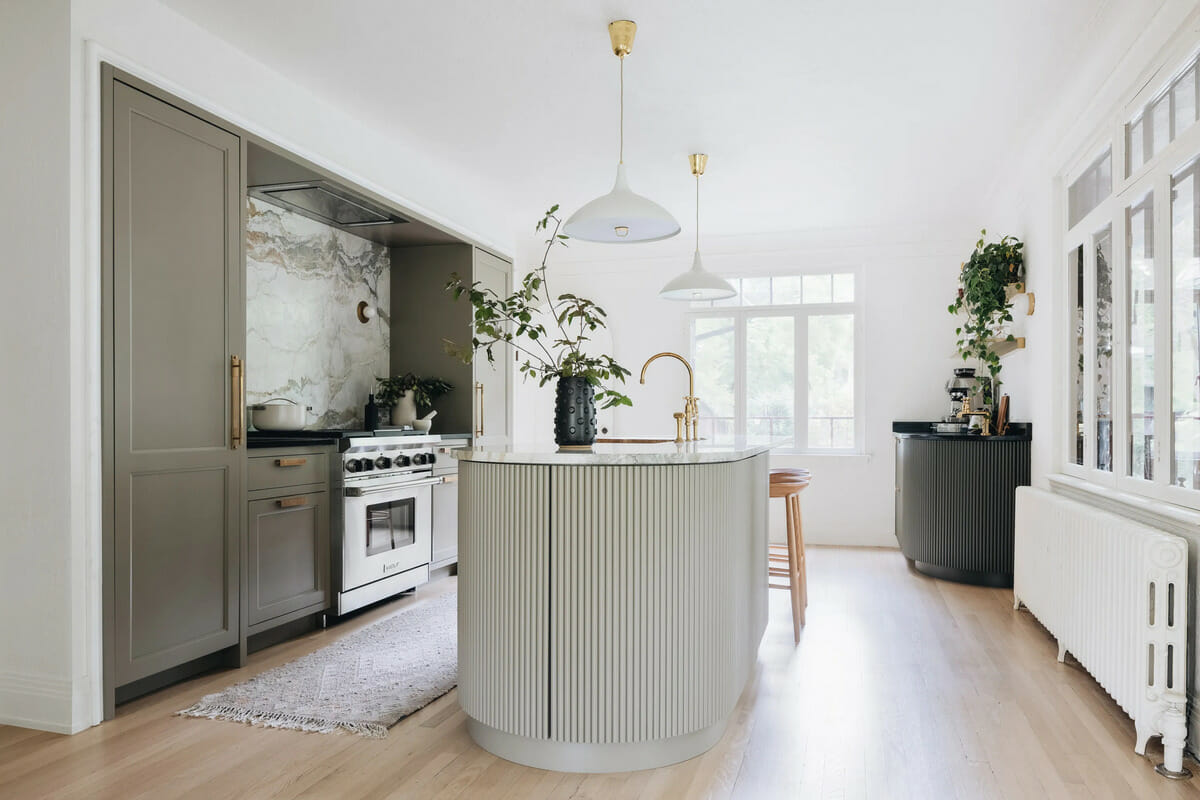
The remodel featured by Apartment Therapy leans into a warm, minimal mix instead of chasing sterile perfection. That is the right call. The kitchen uses contrast carefully, lets the materials carry the mood, and avoids the common mistake of over-designing every inch.
That approach is hard to fake. It takes editing. Like a good chef who knows when to stop seasoning, the designer leaves breathing room so the wood, stone, and form can do their job.
If you are planning your own organic modern kitchen renovation, steal the logic, not just the look. Choose fewer finishes. Make storage smarter. Let one or two materials lead. Then ask yourself a blunt question. Will this still feel good on a rushed Tuesday morning, or only in listing photos?
Your next move
If your remodel board is full of pretty kitchens that all blur together, narrow it down to three decisions first: cabinetry tone, countertop character, and lighting style. Those choices set the direction faster than anything else.
The kitchens worth copying are the ones that stay calm under pressure. That is where this style either proves itself or folds.