Home Fire Extinguisher Guide: What to Buy and Where to Keep It
If a fire starts in your kitchen or garage, you do not have time to guess. A home fire extinguisher guide should tell you exactly what to buy, where to store it, and when to use it. That matters now because most home fires begin small, but they can move fast. A pan flare-up, a faulty outlet, or a dryer lint fire can jump from manageable to dangerous in seconds.
Look, the right extinguisher is not complicated. But the wrong one, or one you cannot reach, is basically useless. You need the right class, the right size, and the right placement. You also need to know one simple rule. If the fire is growing, leaving, or filling the room with smoke, get out and call emergency services.
- Buy an ABC extinguisher for most homes. It handles ordinary combustibles, flammable liquids, and electrical fires.
- Keep one in the kitchen and another near the garage or laundry area if you have the space.
- Check the gauge monthly and replace or service any unit with damage, low pressure, or an expired date.
- Learn PASS. Pull, Aim, Squeeze, Sweep.
- Use it only on small, contained fires. If you are unsure, leave.
What type of extinguisher does your home need?
For most houses and apartments, an ABC dry chemical extinguisher is the standard pick. It covers Class A fires from paper, wood, and cloth, Class B fires from grease, gas, and other flammable liquids, and Class C fires involving energized electrical equipment. The National Fire Protection Association points people to this kind of all-purpose unit for general home use.
That said, there is no one-size-fits-all answer for every spot in your home. A kitchen extinguisher should handle common cooking fires, while a garage may need coverage for fuel and tools. A fire blanket can help with very small stovetop flare-ups, but it is not a substitute for an extinguisher.
Buy for the fire you are most likely to face, not the one that sounds dramatic. In a normal home, that means an ABC extinguisher first, then smart placement.
Where should you keep a home fire extinguisher?
Put it where you can reach it fast, but not so close to a likely fire source that you have to cross flames to grab it. That sounds obvious. Yet people still hide extinguishers under sinks, behind appliances, or in storage closets packed with junk.
Use this simple layout:
- Kitchen. Mount or store one near the exit, not next to the stove.
- Garage. Keep one by the door leading into the house, where you can grab it on the way out.
- Laundry area. Lint, heat, and wiring make this a smart backup location.
- Upstairs hall. If your home has multiple floors, you do not want to run downstairs for help.
Think of placement like a first-base coach in baseball. The player should be close enough to act fast, but not standing in the danger zone. That same logic applies here.
How do you use a fire extinguisher correctly?
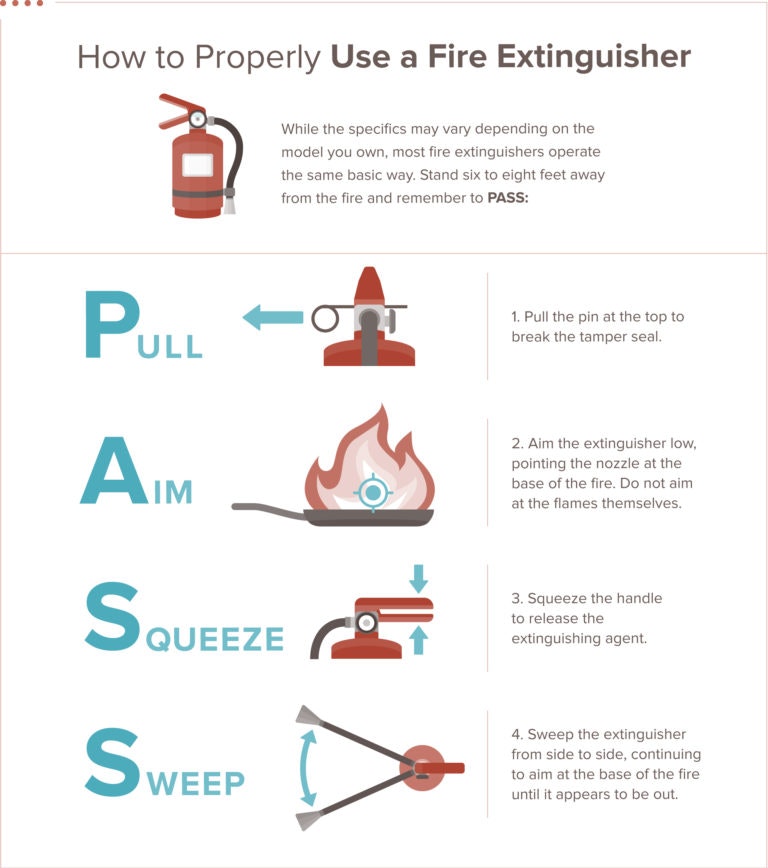
Use PASS. Pull the pin, Aim at the base of the fire, Squeeze the handle, and Sweep side to side. The goal is to knock down the fuel source, not just spray the flames.
But timing matters more than the acronym. If the fire is taller than you, blocks your exit, or spreads beyond one small area, do not try to be a hero. Why risk your life for a pan or a toaster?
Here is the practical test I use: if you can stand with your back to an exit, keep your hand on the door, and reach the fire without stepping into it, you may be in the right range to use an extinguisher. If that setup is not possible, leave.
What size and features should you look for?
A 5-pound or 10-pound extinguisher is a common home choice. Smaller units are lighter and easier to handle, but they empty quickly. Larger units last longer, yet they can be awkward if you are not strong enough to lift and aim them under stress.
Check for a clear pressure gauge, a metal valve if possible, and a wall bracket or mounting clip. Read the label before you buy. Some units are rated for multipurpose home use, while others are more specialized.
You should also look at the service date and replacement instructions. Many extinguishers last for years, but they are not permanent. If the canister is dented, the hose is cracked, or the gauge is outside the green zone, replace it.
What maintenance does your home fire extinguisher need?
Inspect it once a month. That takes less than a minute. Make sure the pin is intact, the nozzle is clear, and the gauge needle sits in the recommended range.
Also check that everyone in your home knows where it is. A great extinguisher in the wrong person’s hands still helps. And if you have kids, show them where it is without turning it into a lecture. Short, direct, memorable.
Some models are rechargeable after use. Others are disposable and must be replaced after a discharge, even a partial one. Follow the label, not memory.
What should you never do?
Do not use water on a grease fire or an electrical fire. Do not walk into heavy smoke. Do not keep spraying a fire that is clearly getting bigger. And do not store the extinguisher where heat, clutter, or locked doors slow you down.
Think of it like a wrench in a toolbox. Useful only if you can reach it, recognize it, and use it the right way. Miss any one of those steps and the tool becomes dead weight.
A simple setup that actually works
If you want a straightforward plan, start here.
- One ABC extinguisher near the kitchen exit.
- One ABC extinguisher in the garage or utility area.
- Monthly checks on pressure, pin, and condition.
- A short family drill on PASS and the exit route.
That setup covers the most likely risks in a normal home without turning your house into a fire station. And it gives you something better than hope, which is a better than average strategy for a smoke-filled room.
Make it part of your home safety plan
A fire extinguisher is only one piece of the job. You also need working smoke alarms, clear exits, and a plan for where everyone goes once they are out. The extinguisher is there to buy you a few seconds on a small fire, not to save the house by itself.
So check yours today. Is it charged, reachable, and right for the rooms you actually use? If not, fix that before the next recipe, power strip, or dryer cycle gives you a problem.