Paris Left Bank Apartment Design With Gold Leaf and Plaster
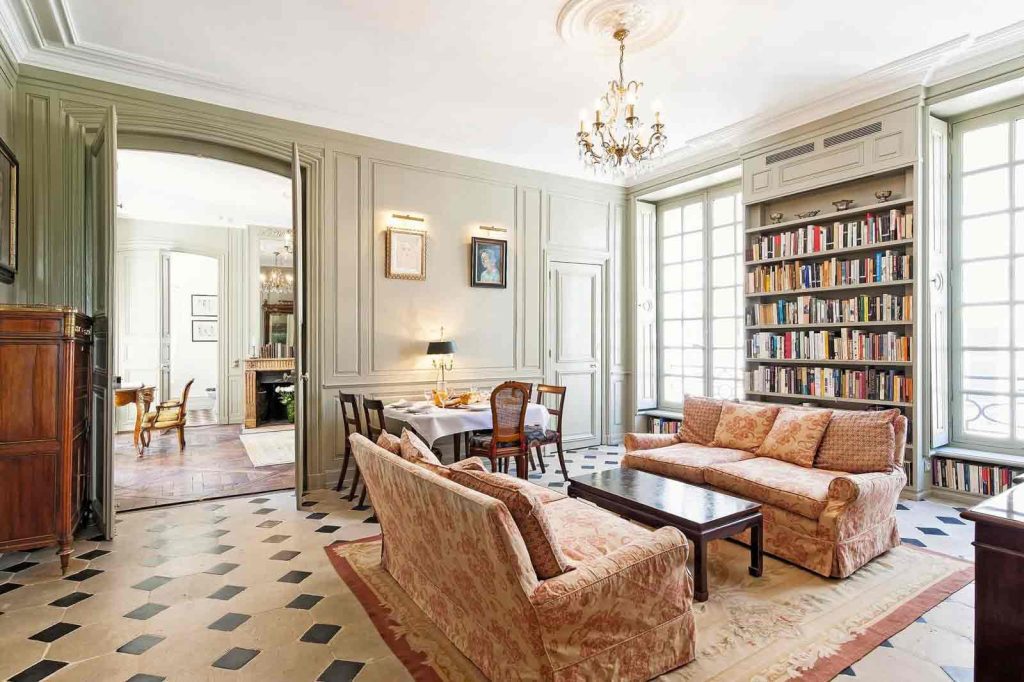
You want a room that feels finished, not fussy. That is the real challenge behind Paris Left Bank apartment design like this one. The best spaces in this category do not shout for attention. They balance texture, light, and old-world detail so the room feels calm the moment you walk in. That matters now because too many interiors chase a quick visual hit and then age badly. This apartment takes the opposite route. It uses plaster, foliage motifs, and gold leaf with restraint, which gives the rooms depth without turning them into set pieces. That balance is hard to fake. And once you see it, you start noticing how often good design is really about editing, not adding.
What stands out first
- Gold leaf works best in small doses. It adds warmth without overpowering the room.
- Plaster softens the architecture. It gives walls and details a tactile, handmade feel.
- Foliage motifs bring movement. They keep the interior from feeling too formal.
- Restraint makes the luxury feel smarter. The room reads as thoughtful, not loud.
Why this Paris Left Bank apartment design feels so controlled
The first thing to understand is that this apartment is not trying to impress you with sheer volume of decoration. It is building atmosphere. That is a very different job. Gold leaf can look cheap fast if it covers too much surface, and foliage motifs can slide into costume if they are repeated carelessly. Here, both are used like seasoning. Enough to notice. Not enough to dominate.
Look at the logic: textured plaster creates a quiet base, then the metallic accents catch light in selective spots. The effect is a lot like a good restaurant plate. If every ingredient fights for attention, you remember the noise. If each part has a clear role, you remember the flavor. Why do so many interiors miss that? They confuse decoration with composition.
Luxury reads best when it feels edited. A room with one strong material and two supporting gestures often looks richer than a space packed with expensive objects.
How gold leaf changes the room
Gold leaf is tricky because it can swing between elegant and theatrical. In this apartment, it appears to support the architecture rather than overwhelm it. That makes the finish feel integrated, almost structural.
Use it where light already does work
Gold leaf has the strongest effect near natural light. It catches the sun during the day and glows more softly at night. Put it in a dark corner with no other texture and it can look flat. Place it where daylight hits plaster or carved detail, and the material suddenly has depth.
The lesson is simple. Gold leaf should respond to light, not compete with it.
The role of plaster in Paris Left Bank apartment design
Plaster is doing more than filling a surface here. It creates a visual pause. That matters in rooms with ornate details because the eye needs somewhere to rest.
Use plaster if you want a surface that feels human, not industrial. It has tiny irregularities that make a room feel lived-in. In a Paris apartment, that quality matters because older buildings already carry history. Plaster respects that history instead of sanding it down into something generic.
- Choose plaster finishes with subtle variation.
- Pair them with one or two accent materials only.
- Let the wall texture do part of the decorative work.
That approach is especially useful in narrow rooms or apartments with less square footage. Texture can make a space feel layered without making it feel crowded.
Where foliage motifs actually help
Foliage motifs can easily drift into decoration for decoration’s sake. But in this apartment, the motif adds rhythm. It breaks up formal surfaces and brings a softer, more organic line into the space.
Think of it as the equivalent of a curve in architecture. Straight lines give order. Curves give relief. A foliage pattern does the same thing on a wall, a trim detail, or a textile. It keeps the room from feeling locked in place.
Keep the motif scale disciplined. Large patterns work if the rest of the room stays quiet. Smaller patterns work if you want a more intimate feel. But mixing too many botanical references in one room can turn the effect muddy fast.
What you can borrow for your own home
You do not need a Paris apartment to use this idea. You need a clear hierarchy. Pick one surface to carry texture, one detail to carry shine, and one motif to carry movement. That is enough.
Try this sequence:
- Start with a muted wall or ceiling finish.
- Add one metallic accent, such as leafing, framed trim, or a mirrored detail.
- Use a foliage pattern in fabric, wallpaper, or carved decoration.
- Stop before the room starts repeating itself.
Honestly, that last step matters most. People often ruin restrained interiors by adding one thing too many. The room starts as elegant and ends as crowded.
Why this style still works now
There is a reason this kind of apartment still gets attention. It offers a way to make a room feel special without turning it into a trend report. The materials do the work. The room feels grounded, but it still has lift.
That is the real appeal of Paris Left Bank apartment design. It respects age, uses ornament with discipline, and understands that texture often matters more than scale. If you are planning a redesign, ask yourself a hard question: does this detail earn its place, or is it just filling space?
That question will save you money and make the room stronger. And if you can answer it honestly, your next room may end up looking far more considered than the one with twice the budget.
What to try next
Before you buy another decorative object, test one material change. A plaster finish, a metallic accent, or a foliage motif can shift the whole mood of a room faster than more furniture ever will. Start there, then edit hard. The smartest interiors usually begin with subtraction, not accumulation.