Things You Should Never Clean: 9 Items to Leave Alone
You probably clean too many things. That sounds odd, but it is a real problem. Some surfaces and items get worse with scrubbing, sprays, or too much moisture. If you keep treating them like a kitchen counter, you can shorten their life, ruin a finish, or create a bigger repair bill. That is why knowing the things you should never clean the usual way matters now. The goal is not to let your home get dirty. It is to stop wasting effort on items that need care, not cleaning. And yes, some of the worst damage comes from well-meaning habits.
Look, a sponge is not a universal fix. Sometimes it is more like sanding a table when all you needed was dusting.
What to skip instead of scrubbing
- Wood furniture with a delicate finish, because heavy spray and water can cloud or swell the surface.
- Cast iron pans, since soap and soaking can strip seasoning.
- Electronics, where liquid can creep into ports and seams.
- Leather, which can crack or stain if you use the wrong cleaner.
- Knives and blades, because dishwashers dull edges fast.
Things you should never clean with harsh methods
Some items can be cleaned, but not the way people usually try. That distinction matters. A sealed wood floor needs a different touch than unfinished wood. A stainless steel appliance needs a soft cloth, not an abrasive pad. If you treat every surface like tile, you will create scratches, haze, and residue.
1. Cast iron cookware
Do not soak it, and do not scrub it with harsh soap unless the pan truly needs a full reset. Cast iron depends on seasoning, which is a thin oil layer baked into the surface. Strip that away, and food starts sticking. Dry it well, wipe on a thin coat of oil, and move on.
2. Wood floors and wood furniture with finish
Too much liquid is the enemy. Water can seep into seams and leave marks, and strong cleaners can eat at the finish over time. Use a dry microfiber cloth for dust, then a cleaner made for wood if you need more. Why risk a warped board just to remove a few smudges?
“The safest cleaner is often the one you barely notice using.” That is especially true for wood, leather, and coated surfaces.
3. Screens and electronics
TVs, laptops, phones, and tablets need restraint. Spray-on cleaner can get into openings, and paper towels can leave fine scratches. Use a dry microfiber cloth first. For stubborn spots, dampen the cloth slightly, never the device.
4. Leather furniture and bags
Harsh cleaners can dry leather out and leave it stiff. Direct heat from drying only makes it worse. A gentle leather cleaner or a lightly damp cloth is safer for routine care. If the item is vintage or expensive, test any product in a hidden spot first.
5. Knives and fine tools
The dishwasher is convenient, but it is rough on blades and handles. Heat, detergent, and movement can dull edges and loosen parts. Hand wash them quickly, dry them right away, and store them safely. That takes less time than replacing a warped handle.
Things you should never clean with the wrong product
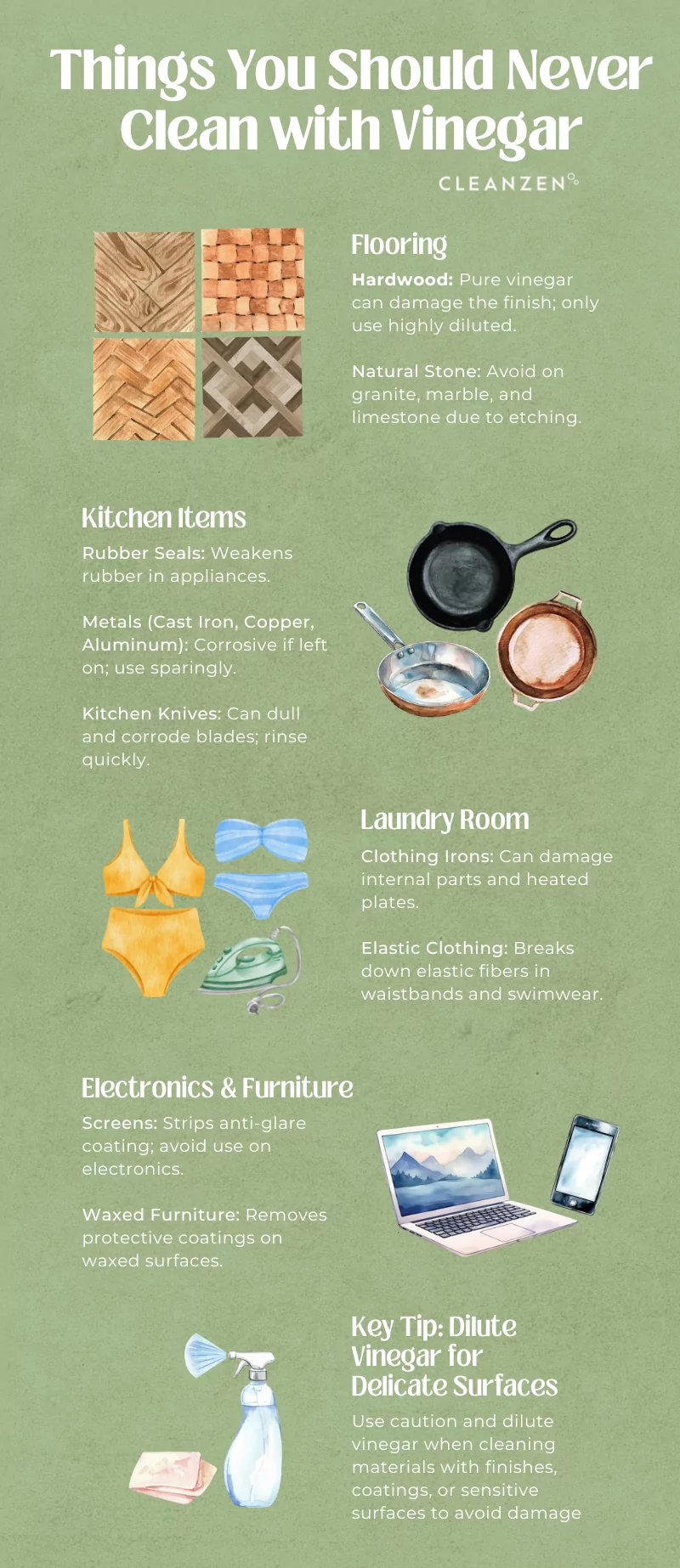
Some mistakes come from product choice, not technique. Bleach on the wrong material can discolor it. Abrasives can scratch polished surfaces. Vinegar can damage stone like marble and granite because it is acidic. The label matters. So does the material.
- Natural stone countertops need pH-neutral cleaners.
- Antique finishes should be handled with a mild, tested product.
- Nonstick cookware should never see metal scrubbers or harsh powders.
- Painted walls can lose color if you attack them with strong chemicals.
This is where people overdo it. They see a stain and reach for the strongest product under the sink. That is backwards. Start with the least aggressive method and work up only if you have to.
How to protect items you should never clean aggressively
Use a simple rule. If an item has a coating, finish, coating, patina, or delicate surface, treat cleaning like maintenance, not restoration. Gentle dusting, dry cloths, and spot cleaning usually do the job. Keep microfiber cloths, soft brushes, and material-specific cleaners on hand so you do not improvise with the wrong tool.
- Read care labels and manufacturer instructions.
- Test new cleaners in a hidden spot.
- Use less liquid than you think you need.
- Dry items fully after any damp cleaning.
- Stop if the surface changes color, texture, or shine.
Think of it like cooking with cast iron versus stainless steel. Same kitchen, different rules. You would not soak a seasoned pan and call it care, so why do that to wood, leather, or electronics?
Where the real damage usually starts
The biggest mistakes often come from routine habits. Too much cleaner. Too much water. Too much force. Those three things do more harm than dirt ever will. If you want your home to last, save your effort for surfaces that can actually take it.
Start with restraint. Then choose the lightest method that solves the problem. That shift will protect your furniture, cookware, and devices far better than any heavy-duty spray ever could. What are you still scrubbing that should probably be left alone?